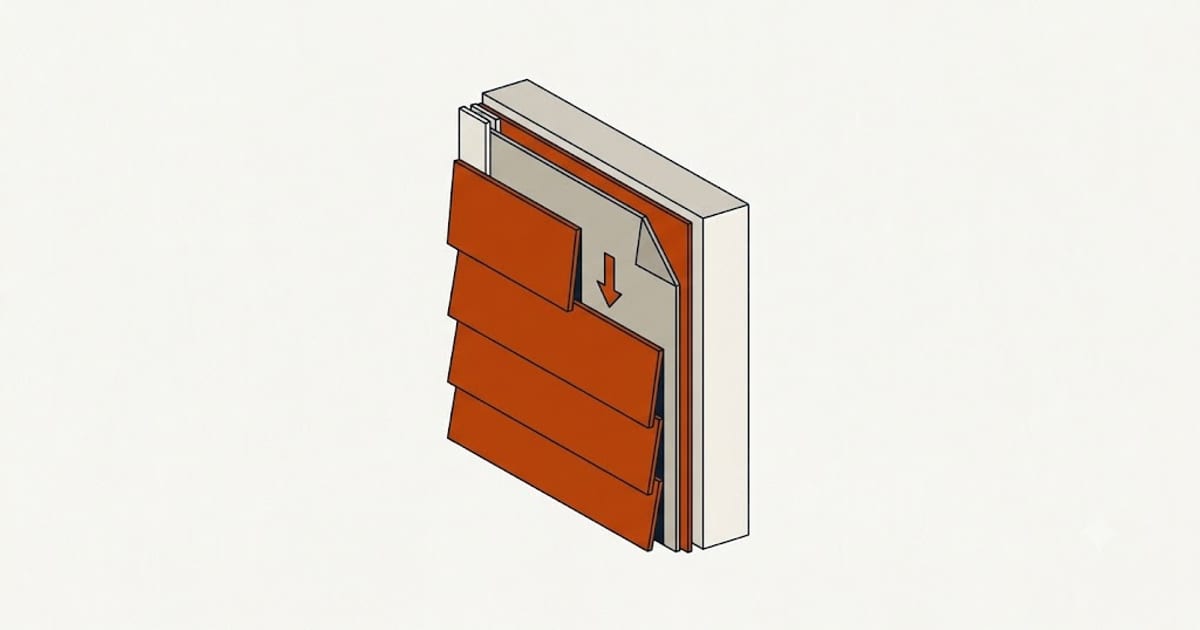
Yes. And the reason matters, because it changes how the job should be done.
Vinyl siding leaks on purpose
Every course has weep holes at the bottom. The panels hang loose so they can expand and contract — a 12-foot length moves more than half an inch between a winter night and a summer afternoon. It is nailed loosely, never tight.
That means wind-driven rain gets behind it. Always. It is not a defect and it is not bad installation.
Vinyl siding is a rain screen: its job is to shed the bulk of the water and let the rest drain away behind. The thing that actually keeps the wall dry is the weather-resistive barrier underneath.
What the barrier has to do
Two jobs that pull against each other:
Stop liquid water getting to the sheathing.
Let water vapour out, so moisture that gets into the wall from inside the house can escape rather than condensing in the cavity.
A material that does the first and not the second — polyethylene sheet, for instance — turns the wall into a vapour trap and rots the sheathing from the inside. That is why "just use plastic" is worse than nothing.
Housewrap or felt?
Both work. They fail differently.
Housewrap is stronger, comes in wide rolls with fewer seams, and is more permeable. It is also less forgiving of poor detailing — a reverse lap in a synthetic wrap channels water straight into the wall.
Asphalt felt is cheaper, self-seals slightly around fasteners, and has a long record. It tears more easily and comes in narrower rolls, so there are more laps.
The material matters far less than the detailing, which is where nearly all failures come from.
The detail that decides whether it works
Lap it like shingles. Every upper piece over the piece below, so water running down the face always travels over a lap and never into one.
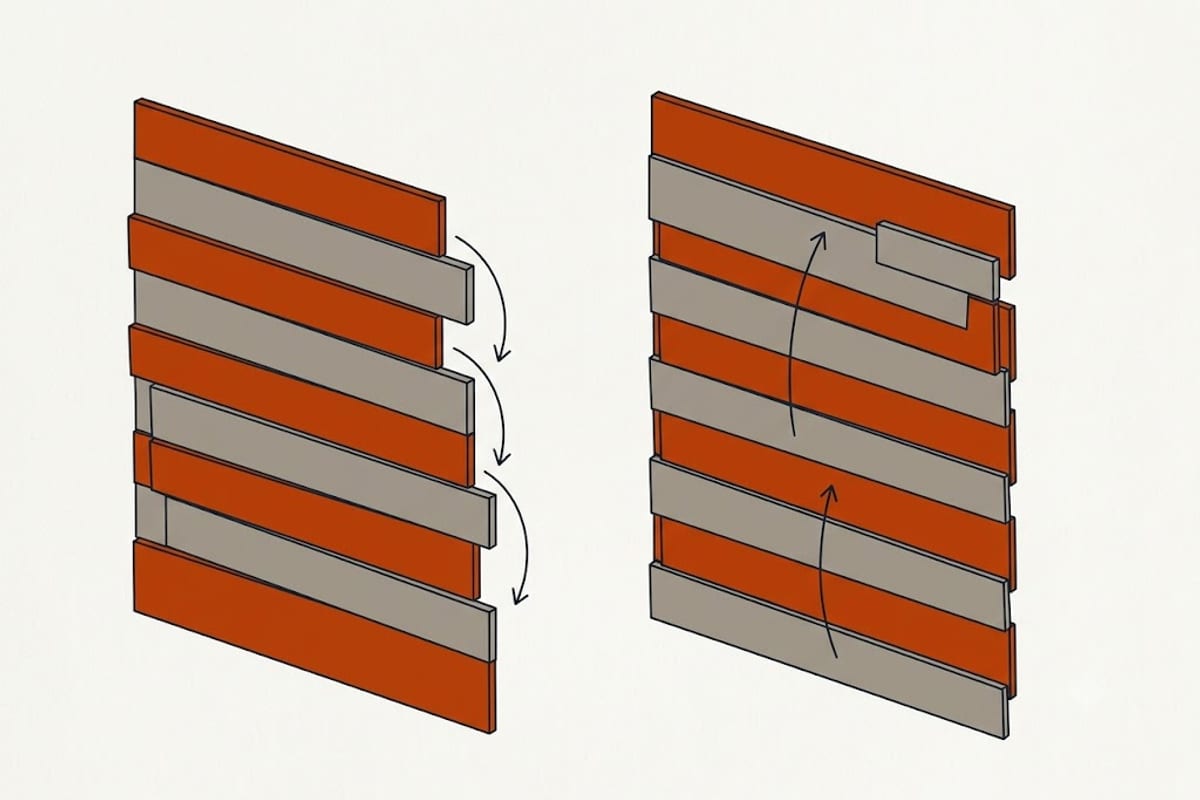
A reverse lap — even one, even six inches of it — is a funnel pointing into the sheathing. It is invisible once the siding is on and it stays that way for years, until somebody investigates a stain inside.
Integrate it with the window flashing in the right order. From bottom up: sill pan first, then the window, then the jamb flashing over the window flange, then the head flashing, then the wrap lapped over the head flashing and under the sill flashing. Getting this sequence wrong is the most common water failure on a re-side, and it is more consequential than the choice of wrap.
Tape the seams where the manufacturer requires it, with their tape. Different wraps need different tapes and mixing them is how tape lets go in year three.
Where a rainscreen gap earns its cost
A vented gap — furring strips, or a drainage mat — between the wrap and the siding gives water a clear path down and air a path to dry the assembly.
On vinyl it is optional, because the siding profile already stands off the wall a little. On fibre cement, wood or engineered siding it is close to essential, and in a wet climate it is the single upgrade most worth adding while the wall is open.
While the siding is off
This is the one time in the building's life when the wall is accessible from outside. Two things are dramatically cheaper now than ever again:
Continuous exterior insulation. Rigid foam over the sheathing cuts thermal bridging through every stud, which no amount of cavity insulation can do.
Air sealing. Taping the sheathing seams and sealing penetrations, before the wrap goes on.
Both are small line items during a re-side and separate projects at any other time. Skipping them should be a decision, not an oversight.