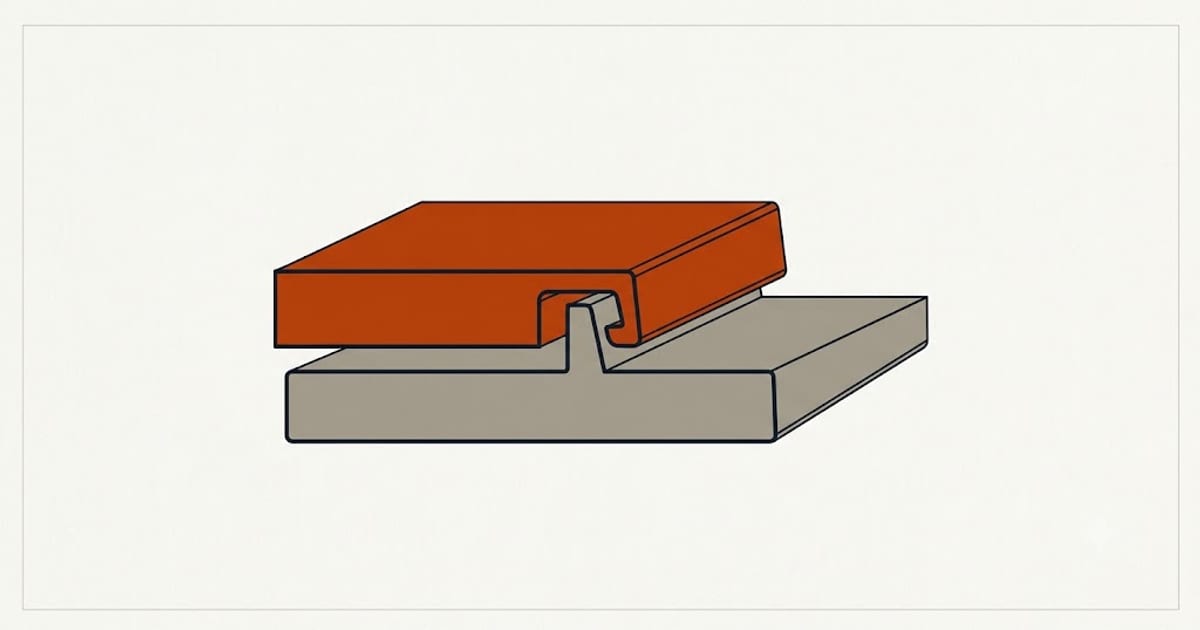
Vinyl siding is meant to move. It hangs loose on its nails and slides as it expands and contracts, and on a windy day a wall will flex slightly and make a soft sound.
A rattle is different. It is two components that should be engaged and are not.
Listen to what kind of noise it is
A rhythmic clatter in gusts. Courses not locked into each other, or nailed too far apart. The most common cause.
A single bang or thump. One large panel flexing and snapping back, usually near a corner or a gable where wind pressure is highest.
A high buzz or hum. Loose trim — J-channel, a corner post, or utility trim at the top course — vibrating.
A scraping sound as temperature changes rather than with wind. That is thermal movement, not wind, and it means panels are binding against trim. Different problem, covered under buckling.
Why courses come unlocked
Each course hooks over a lip on the course below. The installer pushes up until it clicks, then nails through the slots along the top.
Two ways it fails:
It was never fully engaged. Easy to miss on a long panel — one end clicks, the other does not, and it looks identical from the ground.
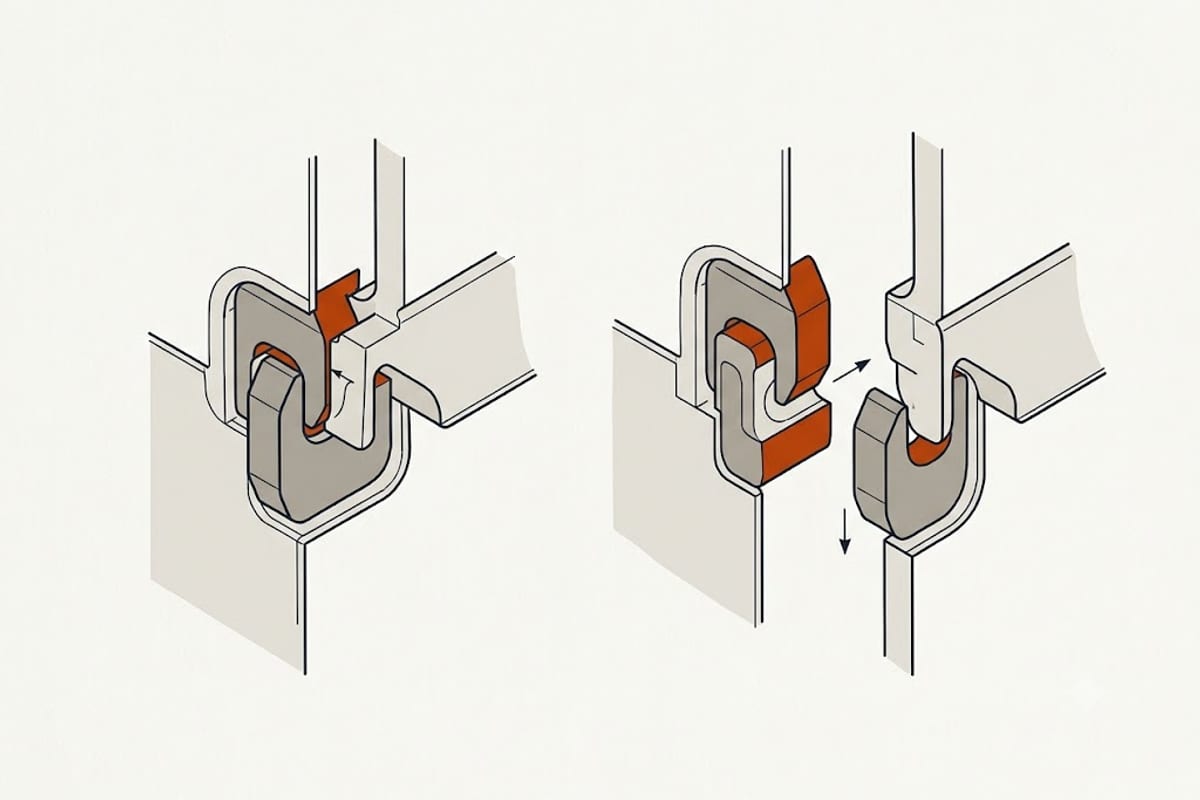
The nailing spacing is too wide. The specification is roughly every 16 inches, into studs. Nails every 24 or 32 inches leave enough unsupported length for the panel to flex out of the lock in a gust — and once out, it stays out and works on its neighbours.
The one that matters more than noise: nails that missed the stud
Fasteners have to reach solid wood — commonly at least ¾ inch of penetration. A nail into sheathing alone holds until the first serious wind.
The sign is a course that can be pulled outward by hand at the bottom edge, or panels that have come loose in a previous storm and were pushed back rather than refastened.
This is the version of the problem that ends with siding on the lawn, and it is worth having checked properly rather than waiting for the next storm to test it.
Where it shows up first
Corners and gable ends. Wind pressure is highest at the edges of a building, not in the middle of a wall. Codes and manufacturers require tighter fastener spacing there for that reason, and it is the detail most often skipped.
The top course. It is held by utility trim rather than a full lock and depends on the panel being properly punched and hooked.
Above a garage door or a wide opening. A long unsupported run over a header, often with fewer studs to nail into.
How to check it yourself from the ground
Push gently upward on the bottom edge of a panel. It should feel positively hooked. If it lifts away or moves outward more than a fraction, that course is not locked.
Walk the corners and gables specifically. If the noise only comes from one elevation, that elevation is where the fastening differs.
The fix
Relocking is not difficult for someone with a zip tool, and it does not mean re-siding. The installer unlocks the course above, re-engages the lock along its full length, adds fasteners at proper spacing into studs, and relocks.
Where nails missed studs, the remedy is more fasteners in the right places — which usually means finding the studs properly rather than guessing at 16-inch centres on a wall that was framed at 24.
If the siding is under warranty
Wind resistance is a rated property, and every manufacturer publishes a rating with an installation specification attached. Fastener spacing, penetration and lock engagement are part of that specification.
Siding that rattles or comes loose below its rated wind speed is an installation question, not a product one — and naming the specific requirements when you call is what gets it treated that way.