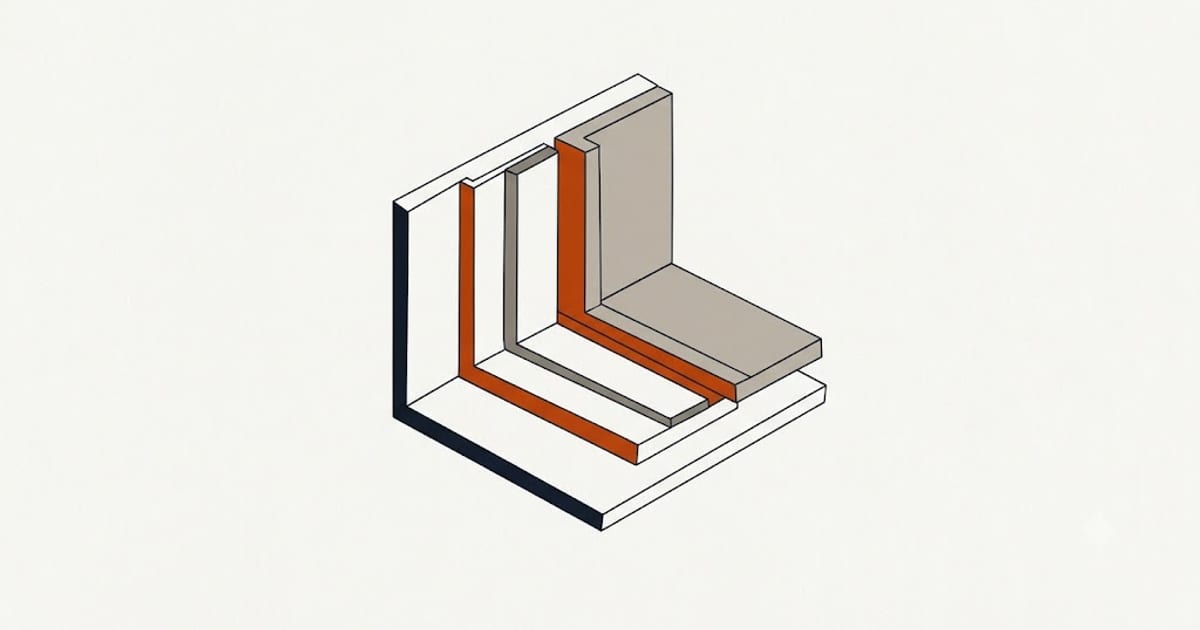
Almost nobody looks at a house square-on to one wall. The normal viewing angle takes in two elevations and the corner between them, which makes the corner detail disproportionately important.
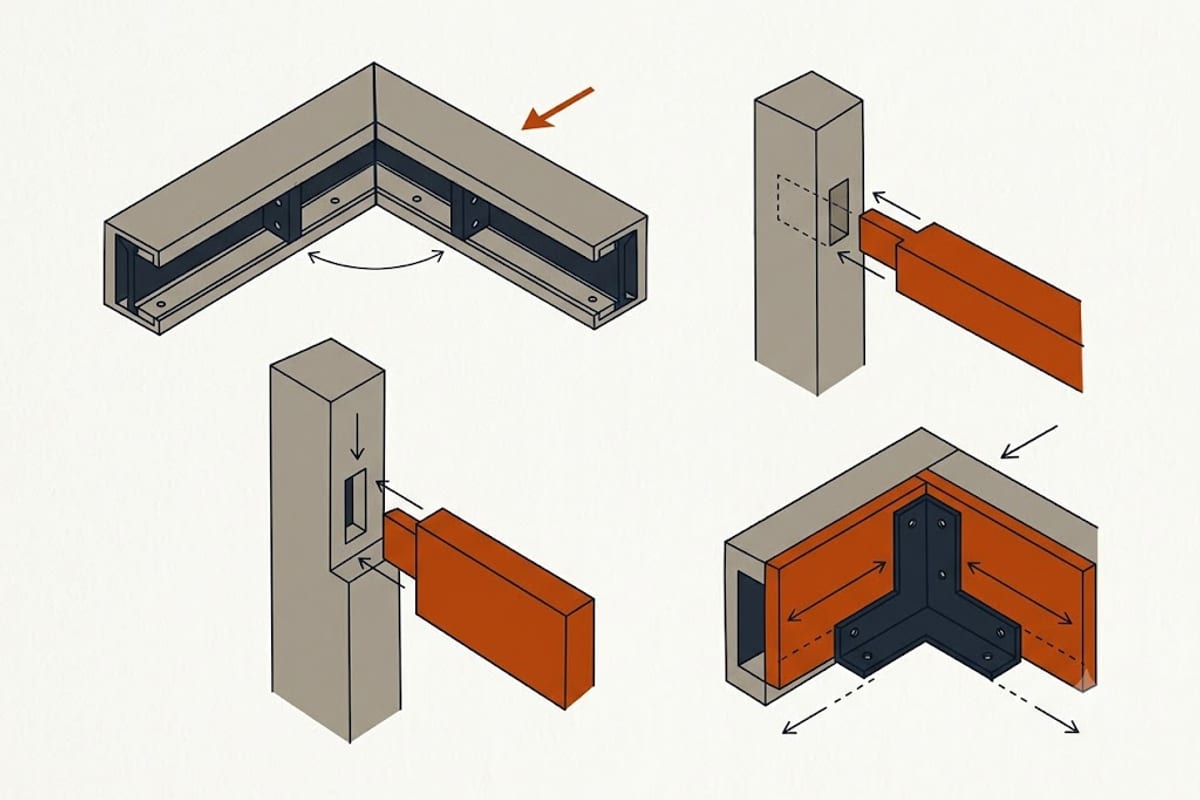
Corner posts
A hollow J-shaped post that receives the cut ends of the siding from both walls.
The standard on vinyl, and effectively the only practical option because vinyl panels must be free to expand into the pocket.
They come in widths from narrow to substantial, and the wider ones read as a trim element rather than a necessity. Choosing the width is a design decision worth making rather than accepting whatever was quoted.
Mitred returns
Each course cut at 45 degrees and joined at the corner, so the profile runs continuously round.
The best-looking option and the most labour. It requires precise cutting on every course, and it only works on materials that do not move much — fiber cement, wood, engineered wood.
On a house where the elevation matters, this is where money shows.
Woven corners
Alternating courses overlap around the corner, one wall then the other, like a log building.
Traditional on wood shingles and shakes, considerably more labour, and it produces a corner with no vertical line at all.
Inside corners
Less visible and still needing a detail. An inside corner post, or a length of trim in the corner that both walls butt into.
The trap is that inside corners collect water and debris. The detail should shed rather than hold, and the trim should not be sealed at the bottom.
What matters more than the choice
Plumb. A corner post that is not plumb is visible from a hundred feet, because it is a long vertical line against the sky and against the roof edge.
Set every corner with a level, and check it again at the top after fastening. A corner out by half an inch over two storeys reads as a badly built house.
Alignment of the courses on both walls, which comes from setting the starter strip level all the way round rather than off each wall.
Consistent width where a post meets the soffit and the water table.
The bottom of the corner
The post has to stop above grade with the rest of the siding, and it has to be open at the bottom so anything that gets in can drain.
Capping or caulking the bottom of a corner post turns it into a vertical gutter with no outlet, which is a slow way to rot the corner framing.
Where corners cost money
The number of them. A house with four corners is cheap; a house with twelve — bump-outs, bays, an L-shaped plan — has three times the corner posts and considerably more than three times the fiddly cutting on both sides of each one.
This is a large part of why two houses of the same wall area quote very differently, and it is worth understanding when comparing a quote for your house against a neighbour's.
Checking a finished job
Stand at each corner of the property and look along the two elevations.
The corner line should be plumb, the courses on both walls should meet at the same heights, and the post should be the same width top to bottom. Those three are visible in a few seconds and they are what distinguishes a careful job.
Fastening the post
A corner post is fastened through its nailing flanges into the corner framing, and on vinyl it hangs from the top fastener with the rest slotted so it can move.
Nailing a vinyl corner post tight at both ends is one of the most common installation faults, and it shows up as a bowed post in the first hot summer.
Where the post meets the roof
On a wall that runs up into a gable, the corner post is cut to the roof pitch at the top and covered by the rake trim.
That cut is on show from the ground on a two-storey house, and a rough one is the detail that most often gives away a rushed job on an otherwise decent wall.